Saturday, July 31, 2010

Iran Film Festival


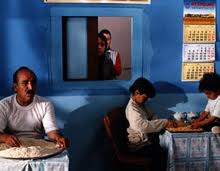
TRANSIT TEHRAN
The Iran Film Festival will be held this month at the Iran Culture House. FC2 speaks with curator Supriya Suri on the films, censorship in Iran and why Iranian film has a universal appeal.


Iranian film director, Dariush Mehrjui once said “The closer you go, the deeper you go into your reality, the more universal it will be.” Supriya Suri, Artistic Director at film society, Cine Darbar and curator of the Iran film festival this month tells us, “Ever since the beginning of the Iranian New Wave, Iranian directors have been trying to look deeper into their social problems and have attempted to explore through cinema keeping their own people in mind which therefore catches global interest.”
Iranian cinema has generally been defined “as an antecedent of Italian neo realism with layers that predominately carried a social or a political subtext. Suri says that defining has its limitations and that to her Iranian film “symbolises a material truth that though constraint showed the realities of the world through mise en scene that clearly smelled, felt, and behaved just like Iranians- a realism that could not have been anything but Iranian.”


The festival in August at the Iran Culture House will screen four films. “The festival focuses on directors and films which are less popular among the Indian audiences. At the same time,they are combined with the popular names to have a wider reach among the audience.”

Baran by Majid Majidi was made in 2001 and set in Tehran is about a Kurdish construction worker Latif who is a complete slacker at his work till the arrival of Afghan refugee worker Rahmat. Rahmat turns out to be a woman, Baran in the disguise of a man. This revelation changes both their lives. Asghai Farhadi’s Fireworks Wednesday is about Rouhi whose first day at her job is on the Wednesday before the Persian New year when people traditionally set off fireworks. Rouhi finds herself amidst a domestic dispute between her new boss and his wife. Transit Café by Kambozia Partovi is about an Iranian widow who rebels against the expectations of traditions by re-opening her late husband’s Europe / Asia border café. In The Passengers, directed by Behram Beiyzai ,a young woman’s wedding day becomes a ritual of mourning when her sister and family die in an auto accident. The Wind will Carry Us directed by Abbas Kiarostami is about a city engineer Behzad who comes to a rural village in Iran to keep vigil for a dying relative. The film follows his efforts to fit in with the local community and how he changes his own attitudes as a result. Suri says that they “tried to move away from Iranian New Wave films to understand the aesthetics of contemporary directors like Asghai Farhad and Kambozia Partovi.”

About curating in India, she says, “I feel the job of a film curator/programmer is yet to be understood and to be taken seriously in India, since they can be extremely crucial in shaping the cinema culture of our country. This a primary reason that in Delhi, every second week you will see a film screening but half of them would be empty or contain films that were simply shown for the sake of showing something. It’s not just about matter of loving a film; one needs the right reason, a solid discussion and a coherent team to push ideas beyond the established cannon.”

Does the global sidelining of Iran impact the reception or making of Iranian film, one wonders. Abbas Kiarostami was refused a visa when he had to attend the New York film festival as was Bahman Ghobadi for another festival. Suri thinks that geopolitical acts are condemned in the festival circuit. It has however created an interest in a “voyeuristic, curious or even a journalistic sense.” .

However, Iranian filmmakers work under the permanent shadow of censorship and this means their films have evolved in a constant attempt to sidestep the censors, to use metaphors, to tell childrens' stories. “Under the Islamic rule the restrictions were even more tightly compounded towards formulating a vision of the ‘Islamic state cinema’ that was guided with ethics and moral codes i.e. the freedom, expression and depiction of women onscreen. It’s due to such limitation that directors began shaping ideas on how to tackle problems of the society in a complete new aesthetic framework. Iranian directors have also potrayed children like no other country has. The innocence represented through Jafar Panahi’s White Balloon or through many of Abbas Kiarostami films cannot be outdone by any other director. Iran is a perfect example of how these limitations can give rise to masterpieces.”

(IRAN FILM FESTIVAL will be held at the Iran Culture House on August 5, 6 and 7.

The Sushma Seth interview


You enter to meet the clatter of schoolrooms, children giggling over colourful textbooks, duster pounding, chalk particles flying and you search for the drama room.

A group of little girls in salwar kameezes with dupattas wrapped tightly around glide in gracefully and perform the surya namaskar. Krishna Sudama is a play performed by kids from the slums nearby, who take tuitions at the NGO Arpana on Mathura Road. This will be staged at The Shri Ram Centre this month. The girls burst into dance splitting in twos, many pairs of Krishnas and Radhas. The children enact the ancient tale of Krishna and Sudama’s friendship. Director Sushma Seth points out that a girl should be moved in front because she is tiny and yet so talented. With careful co-ordination of schedules, 80 children gather in this hall every other afternoon to become Gods and dancers, leaving other worlds behind.

They have been rehearsing this play for two years and have performed six times already.
“We use techniques of movement, action, reaction, and improvisation. I allow for spontaneity, for the children to develop ideas on their own. We wanted to write a lullaby that Sudama’s wife sings when the children are cold and hungry. I told the kids to come up with some lines so that we can construct something. The next day, a girl came with a few lines and said she wants to sing it to us.
She had written and composed a whole song. It turned out to be the most poignant part of the dance drama.”

One wonders if and how theatre has helped these children. “It is a gradual process. One doesn’t browbeat them. The minute you give them a speaking part, they are given an opportunity and develop a tremendous confidence that they can do it. Theatre is a facility for them because they dream of acting and singing. A lot of these children, when I met them first, they were extremely shy, deadpan. They wouldn’t open their mouths. But, I didn’t rush them to learn their lines. I don’t impose anything on them. I let it evolve. I want them to enjoy. Drama and elocution should be fun. After all the other lessons are so serious.”


Today they are pockets of energy, connecting, making drama, breaking walls.

Seth has reasons for choosing mythological scripts. She directed Shabari with the kids from Arpana before Krishna Sudama. “All the plays I have done here were written by the spiritual guru of Arpana. Also, I think mythology is about universal values. When you teach children, you have to do it subtly. You cannot say ‘Speak the Truth’ or ‘Make friends’, but when you enact it, the learning comes automatically.”

The script recorded by the children plays in the background and the characters lip sync perfectly.
(“We record because it is impractical to give so many children lapel mikes for performances.”)
Everyone knows everyone else’s line and if children are absent, which happens often because of the different schedules, someone is always there to replace the missing actor. Golu, who plays Sudama today, is spot on with his dialogues and theatrical expressions. Ask him if it is his role and he says no and that he is just filling in. “I love everything about drama. I recently started doing this. I am in class IX. Bahut mazaa aata hai.” He was one of the children who wouldn’t speak a word one year ago, but today he is the boss, the leader amongst these children. A bunch of girls echo his sentiment, but when I ask what they want to do after the 10th, they say 11th. “After that, college and then job lag gayee tho kaheen pey government, teacher aisa, accha hoga.”

Seth says, “The only disadvantage with acting is that it is difficult to take it up as a career. I never tell them that they should. I tell them studies are more important, they should get moving, learn a skill, and earn a living. I never tell them to go try in film schools or television school because they come from families where it is critical for every member to earn an income. Nowadays, even
graduates from drama schools don’t get jobs. There is absolutely no money in theatre. There is no theatre going habit, at least for Hindi theatre. A play has to run for at least 100 days continuously in order for the actors to be paid. When I acted on stage, we did weekend shows and could barely break even.”

Many of the students are passionate about making it professionally. A boy, an old student at Arpana, who looked about 20, came up to Seth and touched her feet. He told her he hasn’t found a job yet. She told him to meet her later to talk about the possibility of helping her with her theatre workshops. “He is a brilliant theatre person and has been working in television channels but they just don’t pay apprentices enough. Of course they all aspire but it is just not practical. When I do plays, I cast from their communities, their friends and older children.”


Seth, who has worked in Bollywood, television and theatre, says theatre is what she is most drawn to. Children’s theatre happened by accident. She needed to entertain her children during the summer vacations. Her friends wanted her to teach their children too. Workshops led to productions. She founded the Children’s Creative Theatre in 1971 and conducted workshops and directed plays for the group in Delhi and Mumbai till 1983. “Children’s theatre in India is mostly in the schools. I have been speaking to NCERT. They cannot introduce theatre in the syllabi simply because academic requirements are themselves so expansive, one cannot overburden the child. We, the promoters of the finer arts, are striving to have more space for the arts in schools, but it will take time. Parents want to push academics to the forefront. I want to tell parents and mentors that they should allow children at least an hour everyday to paint or pursue any other art that helps a child to explore his/her creative potential, to feel like she has achieved something even if it means sacrificing study time.”


Seth says working with underprivileged children has been different in some ways. “They are more disciplined, more enthusiastic. It is such a big opportunity for them. I have been doing this for ten years now.”

Talking about her book, Stage Play: The Journey of an Actor to be released later this month, Seth says that it is a book that evolved from the notes she took doing children’s theatre in the 70s. She did workshops at Prithvi and NCPA in Mumbai and NSD in Delhi. She was always conscious about being democratic, casting all the children in good roles and involving them in the decision making process. Theatre is not just for the extroverted ones. “Even the introverted children should be encouraged to
open up because they also can benefit from the creative process. There is a lot that I learnt all those years. When I went to America, (she studied drama at Carnegie Melon University at Pittsburg) , I saw that children’s theatre was given so much importance. I later put all my knowledge to practical use and wanted to compile everything into a book.”


After decades in theatre, the inevitable question is to ask her to look back and comment.
“The grass has risen for sure, but not as vertically as we hoped it would.” Seth says that theatre as a profession is still very difficult and there are a few exceptions like NSD, which is government aided. “We wish there were more corporates but the ones that do sponsor theatre are the alcohol and tobacco companies, and we don’t want such companies to sponsor children’s theatre!”

“Delhi is a spoilt city. All shows are by invitation. Nobody wants to pay. In the past, Maharajas patronized artists. For artists, it is difficult to combine the creative and the practical. Artists need support. I am unable to request anyone for funds, to say that these are underprivileged children, to even mouth these words.”
Krishna Sudama will be staged at The Shri Ram Centre on August 13. The book Stage Play will be launched before the performance

Thursday, July 29, 2010

Bombay pace Delhi paced

Romanticisation ahead so beware. And I've had to explain that this is to me , to me and to my life. 


Anyhow so Bombay to me is a thriller, a page turner, yo are interested in what happens in the next page. It's all fast paced but when you are done, you are somewhat spent and you realise you had such a great time , and you did all these fabulous things,  but you don't remember the details.You are kind of hungover and want to drink lemon juice and go to sleep under razai, over AC.Plot takes centre stage. 


Delhi though , is more like literature , not nobel prize winning or anything but an amazing book on the fringes of great literature. 
There are pauses and spaces where you can see that there are branches and birds and trees. There are experiments in metaphor. 
And there are layers, there is ancient History that underlies many things.It is slow, and at disco like moments in life, you want to hit the speed button.When you are done, you remember the details, the anger, the pain , the joy but the plot does not take centre stage. 


 Ofcourse such a comparision can never be made in a wholesome way, because Literature cannot be defined .
But, this is a thought that came to my head when taking an auto. 

I read a Vikram Seth quote recently. I am not quoting , but paraphrasing. There is no point, over fine tuning , editing sprucing up writing because life is messy and the messiness is lost in writing when you do that, some life is leached out of it. 


Monday, July 26, 2010

dined at almost Italian trattoria , got robbed, filed an FIR.


Most people know me as disaster queen. Such weird things happen to me. Touch wood. But I just have to have to document it here but before I get there I have to say it was just a sweet Sunday. 
Anyhow, I have discovered Flavours in Def Col. It is a lovely restaurant , with an outdoor section facing a park that really reminded me of Rome. 
The food was fairly authentic. C had pizza with goat cheese and grilled vegetables ,which was fabulous although they were a bit kunjoos with the goat cheese. I had Rigatone or whatever tube shaped pasta is called. Competent. 

Tragedy unfolded though when we decided to go to the Red Fort. Bright old me decides to take the metro. I haven't used the damn thing in like two months.I get on at Mandi House and before the inevitable security check, I zip my bag shut feeling so proud of how careful I am. As usual, the train is really crowded. Just before i was about to get off, I notice that my zip is a wee bit open. My heart freezes but I courageously walk out anyway. MY wallet , which is a fat 2 year old stuffed with silver earrings, thousands of business cards, cash , old bank receipts, kajal, store membership cards ,driving license, PAN card, photos, free movie tickets to a cinema in Noida, memories is gone. 


I have to gather myself. Just the previous day, I was admiring my lovely red wallet and marvelling at how long it had survived. Sufi slut dropped sambar on it  I just really love this allet so I was thinking about keeping it till it really falls to shreds. 

Now it was gone. I felt so sad and tried telling myself all sorts of LET GO , it is only material anyway lines but it didn't help. I called my dad and he asked me to go to the police station not because the Brilliant Delhi Police will find him but because the proof of loss will be one piece in the long Red Tape I have to sumbit to get a  new license/pan card. 


I vowed to do it later but I just needed a break from the crowds and since Red Fort was shut by this time, we made our way to Lodhi Gardens. I am continuously impressed by how SOME public parks are so well maintained in Delhi. It was great to see real wild life in abundance . Squirrels chasing each each other, parakeets at close quarters, parakeet pigeon wars for the perfect perch on that gorgeous mounument's window, the lush green and the picnic-ing families and making out couples. 


I had to of course finally confront my fear of the police station. We decided then to go to the Paharganj police station. My mind filled up with stories of custodial violence, and of an interview I did some years back with a dalit man ,Deliraj, who was randomly accussed of murder and beaten mercilessly and left with life long injuries. You know , how police stations are, they are stagnant , pregnant with ineffeciency, lethargy, the smell of urine, and Torture. 


I am instructed to write , with a pen , the details of my complaint.When I did so, I was escorted by the constable to meet the inspector. The constable asked me if the white boy with me was my companion(saathi), where I lived, what I was doing at Paharganj etc. 

When I reached the inspectors' office, he asked me to wait and I waited in all for about an hour. 


We were waiting in the waiting room which also doubled up as the office of fat , ununiformed constable,Parveen Chand, who in the whole duration of my stay there ( and I realise this in retrospect after C told me) didn't take his eyes off me. He kept asking me personal questions about where I live. I kept telling him that I live in South Delhi, not wanting to give details, obviously. 
In between, I got into a long conversation with him about the 'atankhwadis'' photos pasted on the bulletin board, Abu Salem etc. I asked him so many questions that he asked me if I was a journalist. 

He asked me again(in retrospect flirtatiously) where I live. I said that I live in South Delhi. He said "ok , ok , but here in Paharganj , where do you live? Which hotel?''

I was kind of exasperated now because none of this has anything to do with my FIR. I told him for the last time that I came to Paharganj to shop. 

During this whole process, the inspector walked in and out with very minor questions on my CLEARLY filled out application form, each time, promising that I will get my report copy in ten minutes. 


So this man , the fat constable, tells me that he will give me stories and that I should take his number. You never know when such a thing can be useful, so I agreed. This man, Parveen Chand,then told me a long elaborate story. " I found a coke bottle , sealed with flies in it." Confused look from me. " See , there was a seal , and there were two mosquitoes in it." Confused look. 

"Haan so , I had gone to the Videocon building and I told them about it, " Confused look. " You know, the Aaj Tak office is there?"

So , that was his idea of a news scoop. But it was all getting really surreal for me now, coated with the commonwealth of dust from the Paharganj market, the silent Hindi less C next to me. (Yey Russian hain?)


"Give me your number , he said., Parveen Chand." I lied about not having enough balance to give  a missed call. He insisted about 5 times that I give him my number anyway. I was so exhausted by this point that I had to will to fight. I said ok and read out number carefully like it was dictation at school . ( I don't remember my number, I have it saved as 'Me'. 

At this point, C , starts screaming at me asking me why I gave him my number in front of Parveen Chand. 
,

The Inspector finally walked in and asked me to write my address. I promptly wrote down my entire address, complete with landmarks , like for an invitation to tea. Half an hour passes and then the inspector walks in again to say that the computer isn't working so he cannot give me a FIR copy. 

I instead write down my whole complaint with pen on paper and get him to stamp it. 


Ultimately, the scariest thing, which C put in my head is this. The police know everything about me.  


Images from Getty Images

Thursday, July 22, 2010

Aunty Chronicles

I take an auto as usual to work and am stopped by Aunty on way who wants a ride to Kalkaji. I tell her that I am not going there but she insists on coming with me to Nehru place. She is voluptuous , polyester kurta wearer who smiles a lot and instantly befriends autoboy.

Anyway, she asks me what I do. I tell her I work for a magazine and in TWO minutes she has asked me where I am from , who all are part of my family, who I live with in Delhi, whether I speak punjabi etc. 

Her handbag is swollen.For some reason, my mistrusting soul starts getting really scared. On top of that she slightly opens swollen handbag and pulls out a white piece of paper. She asks me for my phone number so that we can bathcheet karo later. I tell her that 
I don't have a phone. She asks me why. I come up with some weird explanation. Then she says " Why don't you give me your address?"
My mistrusting heart flips but I manage the courage to say that I live near X block market with a huge conversation sealing smile. 

She pinches my cheeks and the rest of the journey continued peacefully with me wondering when Aunty will get off.

When she finally did, I felt really silly. I just lost the opportunity to get lots of invitations to rajma chawal dinners. What was I thinking she could be? A serial killer! 

Anyway colleague, Sufi slut at work said that aunty probably wanted me to befriend her daughter. On top of that Ms.Sufi said I look hot except my kajalless , ill looking , sleepy face. So far. So good. 

Tuesday, July 13, 2010

Raw.

Atleast for three weeks , I've been wanting to write about how raw I feel. And this doesn't really mean I am unhappy because actually for once my life seems in place and in a balanced way . It's just a feeling of fragility I have arrived at , the complete surrender and understanding of the fact that this too shall pass. And what next?

And I've tried my best to be centered , to access an inner silence if I feel weak or want to snap. I've understood that the strongest link is me and everything else will pass.

You know what the beautiful thing about this is? It is that I live in the moment , like really really , in an Oshoesque way. I am constantly in this haze of gratitude and touch wood because a day spent in the Hauz Khas monument smoking cigarettes when things are the way they are is a precious thing. Or spending a whole Sunday with friends at home.

Do I scare you? Do I sound self help? Listen, I am not but I just don't feel articulate enough to express this combination of distance and love that I feel.

Friday, July 02, 2010

P.Sainath and farmer suicides.


There is an issue of Vogue lying on the floor. They took a long time to put it together , a year and a lot of international co-ordination to get Abhi and Ash to pose pretty in Istanbul. Let Vogue be your inspiration, the editorial says. Monsoon chic and all that.

My mind works in constant irony. But I will resist it now . You say you know hunger statistics already ask what can we do sitting here in an airconditioned room anyway.

I went for a talk by P.Sainath yesterday. He taught us in college and by now we know he repeats some of his jokes, his favourite statistics and he even presents them in a way that will have you shocked. At Wardha, a fellow journalist told Sainath that he believed the farmers in Maharashtra committed suicide because they were alcoholics.
Sainath said if alcoholism was a legitimate reason for suicide , then there will be no journalists left on the planet.


In the budget, there is evidence that the government wrote off Rs. 500,000 crores of corporate tax. Revenue forgone , the section was titled. Five hundred thousand crores. And a farmer commits suicide every thirty minutes , sorry thirty two because of debt.

A TV journalist shoved mike up nostril of Sainath's friend and asked " What is the dream of the Indian farmer? "

The friend answered promptly that the Indian farmer's dream was to be an European cow.
The subsidies that the European cow gets exceed the earnings of an Indian farmer, obviously.

The man shocks, but that is why I go there to hear him because it is so easy to get absorbed in your own life. I still remember this one line that he said in his speech at our graduation ceremony .He said that we must report on the ''important processes of our time'' which we overlook for cricket, business and bollywood. CEOs , bottomlines, travel, theatre stories later, I am still not there but I want to be.

As Sainath said , if he has been in journalism for thirty years, it means he has to be an optimist.

Some Ivy League type who announced that he is an academic asked Sainath if modernising was possible without injustice because somebody has to get screwed. He gave Historical examples.
Sainath simply said that the problem is that we , the rich have decided that it is clear, who gets screwed each and every time.

Thursday, July 01, 2010

Delhi Delhi

It is raining. Finally . I have been wandering in and out of Delhi since Feb. But this is the end of my first real month in this city. I was dreading  it initially. My closest friends in Delhi were away. But (touch wood touch wood touch wood) it has been so great. Rediscovering all my old friends,  new ones. Overdoing 4s and forgive me , Select City walk , eating bamboo shoot and spinach soup at home, Cafe turtle. C comes tomorrow. Hope Delhi does the same for C. 

And the promise of more friends moving here although they are scared they will hate it. Why does Delhi have such a bad reputation? 
So far. So good. Touch wood.  :P 


Monday, June 28, 2010

Choice

The Art Of Choosing
Sheena Iyengar
Hachette India
Rs.499
Rating: ***1/2

An increasing number of people now assemble their life stories from narratives so disparate that the mind reels from trying to contain all that contradiction. Everything is overlapping with everything else.
It is in a world like this, we make choices every day. Husband, career, Pepsi , Nike etc. Part anecdotal, part research based, Columbia University Professor Sheena Iyengar writes in an engaging non-academic style.
If you are expecting self-help style bullet points on choosing well, stay away .You might, after reading, be stranded -abandoned by conditioned belief systems and forced to rethink why and how you choose. Iyengar questions choice using every possible framework through which we question- scientific, political, personal, economic, medical, religious, institutional, individual, and even astrological.
Iyengar demonstrates how the presence or lack of choice can have a profound impact on our health and sense of well being. How you choose to respond to looking at a diagram of an aquarium for five seconds may be determined by whether you are from a collectivist culture or an individualist one for instance.
She examines popular myths and stories from different cultures analysing them to determine how they demonstrate choice patterns, careful not to generalise but instead give nuanced detailed explanations. We get snapshots into brilliant psychology research such as the experiment where two groups of men, one on a hanging bridge, and the other on a regular one were introduced to attractive women who gave them their phone numbers. The study ultimately reveals that falling off a bridge is biologically similar to falling in love.
Most interestingly, she analyses fashion and why you didn’t actually choose what you are wearing but that a bunch of people sipping cappuccino in New York made that choice for you.
Why did coke buy over Christmas? Is there variety or did the market create that illusion? Is too much choice a bad thing?
We cannot opt out of choice but the best way is to continue studying our complex relationship with it. Science can assist us in becoming more skilful choosers but at its core, choice remains an art.
If you have the choice, read this.

Published in First City Magazine , July 2010 .

Thursday, June 24, 2010

Searching for birds


It's been a while since I slept a whole night . Sleep is denied to me because of reasons as oppressive as electricity or as exciting as alcohol but it is more often weather related, unfortunately.
But today, my mind is in a state of groggy shock because it has slept too much but it is too used to not sleeping and hence continues to act sleepy.
Either way, all is well.. I am in office. I bought a pair of sweet buns for breakfast and am waiting for chai to arrive. In the meanwhile, I just want to put my legs up on the chair and try my fusion meditation. It will be a mixture of a Japanese Buddhist mudra and stress release excercises I learnt at Rishi Valley to cope with ISC. As if ISC is stress.
 
Anyway, the idea is to quieten your mind so much till you can hear the last sound. At RV (Rishi Valley) , it was a pampered excercise, babblers and hoopoes fought for attention from your ears and parakeets screeched like naughty children wanting food. You searched and you quietened and you found so much and in the process arrived at a sense of complete calm.
 
I tried the same today searching , throwing my ears out into the vacuous (no beauty, only truth ) Delhi summer. I searched desperately losing myself in the sound of the last automobile but there were no birds except, if I were honest , the fat pigeons flirting in the balcony.
 
I achieved a sense of calm sure but yeah.
 
 
I was having a conversation with my colleagues about the point of blogging. I think the most important reason is to share and to write with discipline , to sort of put yourself out there.
I started because I read a lot of blogs and connected with a lot of especially female bloggers.There is always this question of writing to an audience, writing self consciously. At some level, even in the most personal writing , in diaries etc , there is an awareness of the world albeit at different levels in a blog , a story , a diary entry or whatever. 

I haven't really thought too much about why I write this blog. Most of my writing is very journalisty and that's not really a good thing. 
I started blogging a lot when I lived in Anoopshahr because I really wanted to share everything about living in a village and report , in some sense as well. 

Anyhow Cq  (look I wrote about you) thinks my blog has no focus.(not that you say this negatively) Neither do I. What is this post about? I don't really care about a focus. I just write whatever and that's not likely to interest too many people because I just write random things I guess. Food, development , silliness, books - some of the things that interest me but none of these can be a specialized blog if I am writing that is. 

Random rant. 


Monday, June 21, 2010

I am 23. I am 23. I am 23 years old.

I am a little tipsy. But I will write anyway because you know what- I won't be 23 again in very soon. Because when I was 19, I worried too as you will see here.
I've lived some pipe dreams I think- worked on a farm on Scotland, traveled to Tibet, appeared on national television ( this vaguely counts right, though I cribbed every day then),
more things not all of which i want to say here. But is my title too negative. Not all my dreams are pipe ya. And my blog is 6 years old . 
it's ok na?


I think the label silly girl should be still a silly girl.

Thursday, June 17, 2010

An interview with Kishan Behrupia? What forms can it take?


Kishan Behrupia Jocker whose business card promises monkey tricks, wedding shows among other things, lives in a tent by a gushing greyblack sewer. He is an incredibly talented man who is illiterate, vocal, political , an artist and social satirist. But by now I’ve met many people like this. In Dharavi with the unforgiving television camera, in dozens of villages in UP with an academic mind, in Tamil Nadu as a student, in Andhra as a child.
I’ve jammed all my judgements, my social frameworks in there , that sentence , I’ve tried to lay there a lattice into which a journalist sprinkles impressions , cut pieces of a life she has interviewed.


How do I remove myself and my judgements and allow the person to be, to express so that I can take home a human being in my Dictaphone and then begin to unravel the layers with fairness and serve them as carefully strung sparse words the spaces between which Kishan Behrupia lives.
I don’t know how. But when I meet him, he sits me down in his tent open on both sides, one facing the sewer. Kishan wears an old red and white bed sheet the kind you would get for cheap in the pre theme park exhibitions in the nineties. He wears a frayed green kurta , bright against his jet black skin and hair
He opens his black bag full of the world .He has performed in New York, Mexico, Spain, France, Italy everywhere. He pulls out more treasures, an old frayed certificate from the Fashion Institute of Technology, New York , from the Dubai World festival, a Delhi Times article, a Dubai newspaper with his photo and then his passport.

‘’I am not lying ‘’ he says looking at us, sincerely doubting us. ‘’I have been everywhere. You can see.’’he says pointing to five schengen visas given to him saying that it enables him to go to every country- Spain, France – many others.
“Mein unka basha bhi bol sakthi hun. Ola, bonjour, tres bien, cava bien .’’
All in one breath.
Then he crouches and growls and chatters his teeth. His six year old nephew follows. They have become monkeys. They will become Charlie Chaplin . They are behrupias. Impersonators.
They can be anyone. They can steal from the present and save from the past – they can be Gods and monkeys and Bollywood stars. They sing, they mimic , they compose lyrics that tell you that with the promise of a little money , everyone is corrupt. Kishan’s eleven children aren’t in school. When I ask one of the boys if he will grow up to be a behrupia, Kishan rudely interrupts me saying he already is a behrupia.
The daughters cannot and traditionally there were never women behrupias. ‘’humare bhi ijjat hoti hain. Hum gareb hote hain lekin humarey aurat ghungat pehente hain.Aur unke shadi pur hum beez theez hazaar detey hain.’’ We also believe in status, in respect. Our women cover their heads and we pay dowries of twenty to thirty thousand rupees.
Initially he wanted money to be interviewed. I had to beg him to agree that we as a policy don’t pay people we interview. I felt bad about it because who I am I really to tell a man living below poverty line that he should give me a few hours of his time for free.(He gets FIVE HUNDRED TO THOUSAND Rupees , a day on his trips abroad but much less on normal days) . But then I wanted to meet him. He was pricey on the phone but no trace of that when we actually met. In fact I feel so much affection for this man who lives in tent by the gushing greyblack sewer. He ordered limca soon as I arrived but thankfully accepted my pleas against it.

Is that allowed though – the affection – as an interviewer I mean?

Money is not something he has a lot of . ‘’Delhi ko Paris banana chahte hain log. Lekin ma’am , Delhi Paris nahin hain. Mein Paris Dekha hun ma’am. Vahan pe bhi hota hain , log lal batti main aake saphaye kartein hain.Lekin humara desh key gareb log key jaise nahin hain ma’am. Vahan unko pension milta hain, sarkar madad karti hain, unkey baccho ko school bejti hain.’’ They want to make Delhi Paris Ma’am. Delhi is not Paris . I ‘ve seen Paris. Even in Paris there are people who clean car windows at traffic signals. But they are not like the poor in our country. They get a pension, the government takes care of them, the government sends their children to school.’’ All in one breath.


But you know what, all that I have written is haphazard. I want to be able to put all this coherently, listen to the one and a half hour interview in Hindi and write and know at the end of it that even if my piece is not incredibly creative or evocative, that I have been fair to him.
Because you know if a journalist interviewed me hastily, she would conclude that I am spaced out, messy haired, pseudo , lost etc. Here is an excellent photo essay on behrupias.


You can read the story in First City Magazine. Available everywhere in Delhi, in Odyssey in Bangalore and some places in Bombay.

Tuesday, June 15, 2010

Sex , burqas and a plot full of weeds


Do not read if you want to watch the movie - there are spoilers. 

So if you stretch Sex and the City which was doing just fine - sweet , short, snappy snippets of a single girl in Manhattan in the shows 
and try making movies, you fail. Because you stretch it so much that it snaps. 

The plot is tacky - like a ghagra sold on the street with 13 more layers of sequins than required to make it minimalist and stylish.
So after (most of the) girls are married with husbands, there is not much sex talk anymore - like the man who had to shower  everytime after sex
or the rabbi or the hot European who left money for Carrie. Apart from the occasional nice clothes and the easy on the brain stlyle the sex and relationships bit made SATC what it was. 
Right? I mean I have to talked to a representative set of girls from atleast three nations who agree. 

So if you still insist , (I did by the way) go watch the movie - they get a free trip to Abu Dhabi where the girls ( by now they are aunties really) gush over every piece of free
luxury like school girls would., one gets arrested for obscenity, one cheats on her boyfriend, one finds her bitchy self and one becomes more fun. (No points for guessing who did what.)
Ofcourse , we have the exotic Souk a.k.a middle eastern market scene thrown in , some scenes with the burqaed women, all mostly offensive and an apology of a scene where the veiled women strip to reveal their designer clothes and how much they love New York. And hail universality of womanhood , yeah? These women in black are reading the same menopause guide book that Samantha is and outside is a street with scandalized muslim men hating Samantha the owner of condoms. 

There is some brown panty candy in the form of the butlers that they have in the fancy hotel and I did like one part where Miranda and Charlotte sit over drinks talking about things they would never otherwise say because it would make them feel like bad women.Yeah, I could do with a drinking session like that with a girl friend now. A sip for every statement made. 

Apart from that , kindly refrain maadi.


Friday, June 11, 2010

of Slut Hearts and old Levis

You know that feeling when you go back to your parents' house and your wadrobe has all your old clothes - clothes you might never wear now and clothes that remind you of who you used to be?Sagging flared blue Levis , cow kurtas, frilly short skirts, big checked shirts. Then you find a random Lit essay from college or a History Project from school. All this is frozen in a dark wood cupboard in my room.
And then you remember things you forgot existed, a note written to a friend in college will remind you of a day you went to commercial street and sat on some random steps and talked for four hours. 

Where I am going with this is that so many memories don't surface without cue. I met school friends after a long time and suddenly I remember school in great detail. I bunked quite a lot in school for example and everyone made fun of me for it. But I can't imagine myself as a bunker anymore. (Does that mean I have become a serious aunty? Maybe.) And in general,  I forgot who I was then , different in so many ways. But then at the core we know plus la change, plus la c'est la meme chose.

My lovely watch is missing.I took a special train ride to Zurich from Basel just to buy it. It is the most expensive thing I own and is the only thing I bought on my trip to Europe. Having a slut heart means that I am deeply attached to everything material or human. I hope I miraculously find it. 

Photo:cartier-bresson-child-carrying-painting

Monday, June 07, 2010

Chai

Everyday, I think of at least five things to write about. Sometimes it is just chai- that is what it is going to be about today.
I've been holding in my head , cooking my opinions about the French burqa ban for like some months but I feel it is in this quagmire of extreme subjectivity made worse
by this book called The Art of Choosing (Sheena Iyengar, Hachette) that I have been reading. 
So choice is a loaded word. 
Before I ventured to the lawless north, I had this habit of drinking lemon ginger tea everyday and didn't touch any milk tea nonsense.
But now chai has taken over, many milky hot sweet chais in a  day. It punctuates the otherwise jumbled sentences my life is made up of now. 


So you are in UP, but you have a Delhi number but you are actually South Indian? Don't lie. 


Wednesday, June 02, 2010

The year was 2007.

 There was fierce rain that day , barging into our bus through its flaky painted green windows. ''Shower facility'', a Nepali boy of about twelve told the foreigner next to him.
I was making a bumpy ride from Kathmandu to Nagarkot so that I will be in a scenic quiet place where I can turn twenty one in peace.
 
When you are traveling there are a few strangers who live in contexts so different form your own but there are very few you remember years later because they said so much about the place you were in , sometimes even about what tourism has done to that place.
The green was wet , gaudy and offset brightly by the red buildings with newari style brown wooden roofs. Childrens' peeping faces were framed by ornately decorated windows. The local bus was packed and precariously chugging along the hairpin bends that will lead us to the hilly heaven of Nagarkot.

The boys talked to CQ , my travel partner and another white guy , Jim. The boys asked the foreigners when they could escape to America. Jim told them kindly that they could attend college in America. One of the boys counted with his fingers , years left for him to be eligible for college and sighed loudly that there were nine years left for him to leave Nepal .

They had adopted the humour that is typical of white tourists in India/Nepal - laughing at the electricity problems, the bad roads
and the state of the country in general. They sounded proud that they could laugh at themselves.I don't remember the details about the boys but just that they sounded so grown up.

But to me , they reminded me of Indians and how Indians too self depreciate in front of white people . I wasn't sure whether that is a bad thing in itself but these boys were so young and so sharply cynical in a somehow innocent way.

Do you know what I mean?

They asked me if I am unmarried - instead of asking if I am married.I replied that I am  .

We reached when the rain had greyed the little town with the exception of a few green stains from the hills. We went to a shack and drank hot chai and then found an old bungalow turned into a hotel to spend the night in, to turn 21 in .


Tuesday, June 01, 2010

The academic wealth hidden in house hunting


 I have rather pseudo-lee declared to many of my friends much to their disgust - especially Marie that I have an academic interest in everything. Like, a Romanian guy once chatted me up in a club and I talked with him for half an hour out of a pure academic interest.

So , while most people would worry (not like I am Piggy Chops or anything) that their mobile number has spread like rabies in the internet, I consoled myself thinking of the academic opportunities that awaited me.

So, while advertising on a website for room mates, I described myself and clarified that only women and gay men can have the honour of being my room mate. 

So within an hour of placing my ad, I received  at least 20 calls , all the callers implied subtly that they were gay but never stated it. 
By then , I had found flat mates so I refused all of them but hey continued to call me. 
Straight men don't fall in my bucket of trust especially if they are strangers so I clarified with all the callers making sure they weren't straight men looking to get laid.

All of them wanted to be my friend which is very sweet.I really need a gay friend in Delhi. But they asked me all sorts of questions.


Why on earth would I want a gay room mate , they wanted to know? Won't you feel bad if the men in the other room were together ...I mean Y if they are kissing or you know...? 
There were others who said they were not gay but were just curious about my wish to live with  gay men. Some wanted to know if I am lesbo.
I didn't actually wish to live with gay men in particular but there aren't that many women advertising for room mates and I thought that broadening my target audience will
help me find someone faster. 

So essentially the random gay men and I had a mutual academic interest in each others thoughts . . I once went for dinner with my gay friend who I will name bike  and his date for the night ( I am an unforgiving fag hag) and I was really open throughout dinner. But this guy got so mad at P for telling me that he is gay because apparently he didn't want to admit this to a woman. And he left after dinner . (such klpd)

So, I was sort of touched by these calls and these questions from men who sounded like they expected to be judged but were sort of intrigued , comforted , repulsed (?)
by this girl who posted an ad inviting them to live with her. 


Sunday, May 23, 2010

where the trees once were..

I see the gaping hole where the trees once were, where I ate roasted corn with college friends

and think of myself as the person who still thinks of MG road as Bangalore's main road.

A flyover has snaked its way above the road we thought was full. The grey concrete dragon

will transform into the zipping silver of the metro. And like in Delhi, sparkling people will

swipe their cards with a New Yorker's ease


Down the road in a little corner, a small slice of an old friend's Rajasthani haveli remains, the ground floor converted into a glitzy store selling guitars, its board placed on top of the placard that says

Estd 1807. Only the first floor retains the architectural details stolen from a desert far away.


Beside the house, a little further ahead is the shop 'Show Off' clothing people who frequent the

Clubs around, clothes that shine only in those lights.


Opposite is Ram Prasad veg where they serve pungent beautiful sambar that I remember from breaks rehearsing a play at Baldwin Boys School.


I wonder    if this happens to people who stay long in a place. But was talking to my friend Anasuya known better as Madam Mahila Mukti about how Bangalore was full of firsts for us, it was our first personal revolution, our first questions, our first foray into pain, into everything adult, the first signs of being grown up.

 So many parts of the city glow like scabs on a child's skin. One is never sure if the beautiful, playful memories overpower the faintly painful nostalgia or the other way round.

But I'll always be back, I guess.


After all, I left then to Chennai and then to Bombay. And nostalgia is homeground.

Saturday, May 15, 2010

Have you ever seen the rain? - if you live in Delhi,pay attention

It has been raining in Bangalore , the rain is like a dream , the gentle caressing rain that takes care not to interrupt your day or dirty
your pants but ever so lovingly erases the memory of the ruthless Delhi heat.

It is wonderful to be back to my lovely bright home, to hear birds and drink filter coffee.
It is fun to scandalize my brother with stories of Uttar Pradesh, eat good food and relax for the last leg of my break before I move back to Delhi
and get back to work.

Does anyone know anyone looking for flat mates in Delhi? If yes please post a comment on this post.

I will love you4ever if something works out. :)

Thursday, May 13, 2010

Sex,rides and autorickshaws


The other day I got on an autorickshaw which had curtains on the sides and in front. I exclaimed that it is really cool in here and great for the Delhi summer. 
My friend asked (how men think so fast about certain things no) him if he has the curtain so couples  can come and make out. The 'auto guy let's call him
Bholu said that's why he has it. So, he charges 500 Rupees for three hours driving around hormonal couples. He has a pen drive with five hundred songs. 'Punjabi, English, Hip hop, sab hain madam.'

Regular customers call him when they need him.He said, girls call much more than boys. He  makes much more money this way - atleast 1000 Rupees a day only from the autolove business. Cool no, this crazy city is. 


Tuesday, May 11, 2010

Amici


Meal for two: Rs.1300


Amici at Khan Market is sort of an Italian Mama's kitchen meets a chic American cafe. Wooden floors and practical furniture make for a relaxing ambience. There are gorgeous black and white photographs on the walls, Italian movie posters and suddenly one of Che Guevara. (This made us wonder if we missed the point.)

We started with a pineapple, green apple and banana smoothie  ( Rs.160) which tasted like banana with sour butter milk so best avoid it but the Oreos shake (Rs.150) is rich , tasty and definitely a safer bet .

The crostini with goat cheese, walnuts and caramelized onion (Rs.200) had a nutty interesting flavour.

The wood fired pizzas are authentic and offer good value for money. Two people can share one. We had one with mascarpone, mozzarella, parmesan  and a generous sprinkle of fresh rocket leaves(Rs.350). It was excellent, thin crust and light but to my companion used to the fire of chilli chicken, a little bland, the chilli flakes gladly came to her assistance.

 The pasta with pine nuts, pesto, parmesan and peanuts (Rs.300) – a grandmother's recipe from Genoa tasted comforting and homely and as if Nonna (naani in Italian) actually stood in the kitchen and supervised every step.

We had the classic aglio olio peperoncino(Rs.260)  - garlic, olive oil and chilli flakes for the uninitiated .

Salty, sharp and garlicky, it made for a good meal except when we found a tiny piece of plastic in it which the waiter insisted was black pepper. When he realised it wasn't, he made up by offering us free Tiramisu (Rs.180)  described in the menu as the best in town and quite close to being it actually.

It had the right level of sweetness and the cream was nicely separate from the intense and bitter coffee.

All in all, a hearty Italian meal – good for a meal out with friends – the meaning of Amici in Italian after all is 'friends'.


Faces behind the Commonwealth games

Alok Gangi was resting at a construction site cordoned off from the main road by metal sheets. He was lying on the sand, amidst dug up earth and cables. It is 8 PM and he is alone in a dark puddle at bright Connaught Place. Surrounding him are circles of shining shop lights and fine dining restaurants. He jumps up when I go to him and asks ‘kya hua madam’. What happened?
Alok is one of the thousands of workers helping India get ready for the Commonwealth games.
Slight, light eyed, and handsome in a childlike way, Alok looks younger than he is. He is 17 years old and studies in 11th STD but he left his village, Bacchi Keda in Uttar Pradesh to work in Delhi for a few months. His right ear is covered with a thick bandage. He says he fell at the construction site. His supervisor, he immediately, adds, took him to the hospital and paid for all the expenses.
’I like Delhi’, he says, gushing about the large park and the bright lights at India Gate- which he says is his favourite part of Delhi.
‘But he longs for home, his mothers’ food and care – and is impatient to attend to his dream of being a ‘master’ – a teacher at the government school. ‘Right now, I have holidays but when I go back I will enrol in eleventh standard and I hope to get a job in the village’.
He makes 200 Rupees a day repairing the pavement at Connaught Place and works eleven hours a day – everyday. The money is a treasure by village standards where jobs are few for the landless.
But according to him, there is no sheen to city life, its largeness, its anonymity frightens him.
‘I live alone in a tent in East Delhi, I don’t have friends here and I don’t make the effort to make them.’
‘I went back to the village for Holi for two days but I had to miss out on my salary but it was worth it, acting silly and drinking bhang with the boys from my mohalla.’, he says , his grey green eyes crinkling as he laughed a loud bright laugh . Suddenly, he seemed more alive, somehow larger than our surroundings.

‘Dilli mein to ladkiyan bahut pyari hain’, (Girls in Delhi are very lovable) he adds, but that he will definitely marry one from his village. I ask him if he has chosen one already but he just blushes and looks away.
I ask him what he thinks about the commonwealth games that he is repairing the road for. He says he doesn’t know anything about them and that no one told him anything about it. I start talking about it but he isn’t really interested. Alok has been on the site since eight in the morning and he left home at six. He puts his aluminium dabba into a small green cloth back and gets up smiling at me, saying it was time to sleep. Tomorrow is another day and many more will pass till he can get on with his life as he imagines it.

Southern secrets


Meal for two: Rs.50

A narrow lane behind the PG men's hostel at Delhi University hides a delightful southern secret. Called PG men's' by the students it is an institution of sorts where most students have an account with the Anna who runs it.

He serves up homely South Indian fare with all the flavours right to the dot. There are the crisp masala dosas served with piping hot sambar and fresh coconut chutney (Rs.30). The soft fluffy idlies (Rs.20) make for a quick, light snack. PG mens' does a host of rice dishes as well, the spicy tomato rice is served with raita that it must be admitted has more onion than curd. The lightly seasoned curd rice (Rs.20) is a hit in the summer months.

The ambience is basic and the restaurant is demarcated by a lovely shrub fence separating the lane from the hostel. It is a no fuss joint and the service is quick but no one is pleased to serve you or anything like that. Expect to eavesdrop on jhola sporting students or boys from the hostel discussing notes photocopied from diligent students.

Obviously being the student eatery that it is, PG men's' serves the ubiquitous creative styles of maggi- egg, cheese, vegetable etc.(Rs.20) The many experimental possibilities that the humble maggi noodles offers might horrify the gourmand but the students here seem to love it and it tastes great so what's the harm?

The hygiene score would be 50% but students don't care about this so if you want to go there you have to think like one. All in all great for a quick bite of authentic, tasty South Indian food and it costs very little so if you find yourself in North Campus and craving for the flavours of the South, head here. 


Wednesday, May 05, 2010

Sambar by gora? Thanks, but no thanks!


Remember the time when there was talk of Sonia Gandhi becoming Prime Minister and everyone was angry about why a 5000 year old culture, a country with one billion people needs a foreign prime minister? Indians have pretty much the same attitude about food – we’ll eat all types but we don’t want the goras and the expats messing with our culinary traditions, do we?

I mean, I don’t mind.
I love it when the food boundaries splinter and you can have a khichdi that’s sort of a ‘’ non-syrupy Indian basmati risotto’’ or ‘’Gul-aam- gulab jamun with aam ki kheer’’, scallop brochettes with raw mango and black lentil khichdi.
I love it when cuisines blend like water colours ever so harmoniously. Obviously my first experiments in blending unlikely flavours began in boarding school when we’d crush boiled egg into sambar or put jam in the porridge. For a while after though, I was fated to eat only boxed cuisine like paneer butter masala and butter naan or adai with avial. There is the occasional paneer dosa, the concept of which I abhor, Schezwan idly which can be nice and since I am a pizza purist- paneer on pizza is blasphemy.

There is this fashionable vegetarian restaurant in Edinburgh – David Bann where for instance you can have Chilli with sweet potato and chocolate sauce-
A chilli of butterbean, kidney bean and tomato with roasted sweet potato and corn cake. Served with green beans, guacamole, chocolate and chilli sauce with crème fraiche
Now, in Switzerland I went to Restaurant Hirscheneck, the rebel among restaurants – the only place in Basel where you will find more than one woman with a nose stud and a long colourful skirt.
Bright, informal and loud in a welcoming way, the chefs here pick elements from Asian and European styles of cooking and come up with a different menu every day. Locals say it was a hotspot during the student protests of the 70s and 80s and it seems like a relic from that time and spirit.
But the menu is as new age globalization as ever – Sweet potatoes served with a Thai sauce and Swiss cheese. (This was divine). These two restaurants were my first experiences of creative food, of food as an art, as a representation of the world we live in where we’ve learnt to adopt each other’s cultures in some parts of our life – culinary or otherwise.
C is an expert at inventing recipes although cooking is relatively new to me.
As he says one of the yummiest ’fusion’ things he makes is a roll made of Mexican chapatti(tortilla), sugo all'arrabiata (tomato sauce with herbs and chilli) , Asiago cheese and lots of fresh rocket leaves – essentially Italian and Mexican influences. But it worked- the sharp flavour of rocket and the rich full bodied spiciness of the sauce nicely balanced by the mild cheese.
He just put these things together and it worked.
Now getting to my point about experimental Indian cooking, this article talks about why India is the toughest market for modern Indian food. A part of the reason they say is the attitude that foreigners can’t do better what we’ve been doing for hundreds of years.
We don’t want someone from Dover to reinvent Dal Makhni for us but apparently that’s what expat celebrity Chef Vineet Bhatia does in Delhi.’’ Dal Makhani that’s first scorched and then scolded in a liquid grinder into a thin, intense buttery sauce, and finally laced with truffle oil to give it shine’’ And spicy foie gras that even Bikki Oberoi admires.
There is this restaurant I remember in Belfast (out of all places) that did Indian tapas. Even I laughed. The first time I heard of Tapas is when I ate at Zara in Chennai but Indian Tapas seemed like a strange idea to me. Not anymore.


Ofcourse, only when food types accquire snob value do they make it to magazines.
Because oppossite the World Trade Centre in Cuffe Parade,Bombay, 5 enterprising men set up a makeshift stall every evening and sell the most magical invention ever - Mongolian pasta. This costs hundred bucks but we know that only South Bombay people would pay that much for street food, that is if they ever eat it at all.
Come on guys, Puritanism in food is passé.


(Photos from Tehelka)
1)Gul-aam
2)Patti aloo with beetroot khichdi
3)Roast lobster with brocolli khichdi
You might like to read about ME and the art of cooking.

Monday, May 03, 2010

Science

Explaining and defining reality only through science is like looking at the Pacific ocean through a hole in the wall and thinking what you see is what it is.

Wednesday, April 28, 2010

Delhi diary


Love:
Jhola look always in, colonies- not apartments ,maggi sold at the local chaiwalla,metro,queue to get into the metro,being able to order rocket leaves on pizza,
cheap sexy clothes,free Hair like events,wide roads.
 
Hate:
aggression,commonwealth rights violations.
 
Tolerate:
Heat
 
Improve:
Hindi


Paying girls to stay in school

Sam (Virendra Singh) retired as one of the top bosses at DuPont. But instead of settling down in a shiny happy American suburb, he returned to Anoopshahr, a small village in Uttar Pradesh's Bulandshahr district, to start a girl's school that pays girls to stay in school.  

"I never did social work in my life. I was born in a feudal family and did 'macho' work all my life," says the septuagenarian founder of the Pardada Pardadi vocational school for girls.  

After 35 years in America, Sam realised he was never one of them; he was always conscious of his identity as an Indian.  

In 1984, Sam was in charge of DuPont's Virginia plant. When the Bhopal gas tragedy happened, he had the uneasy feeling that his employers would trust him less as manager of a chemical plant because he was Indian. He couldn't deal with the India that was portrayed in the West -- poor and underdeveloped. He wanted to transform that sense of shame into something productive.  

So when it was time to retire, Sam knew he wanted to go back to the village where, for generations, the women in his family weren't important enough to be mentioned in the family tree; they were invisible wombs to bring male heirs into the family. 

The literacy rate for women in rural Uttar Pradesh is 43%. In a strongly patriarchal society there is little incentive to send girls to school and, in 2000, when Sam started Pardada Pardadi, many girls were marrying at the young age of 13.   More here.


Monday, April 26, 2010

Vedanta

is a single principle, Capitalism, and teaches that the believer's goal is to transcend the limitations of human rights norms and realize capitalism's superiority over humanity.


What makes Vedanta symptomatic of mining and bigcorporate malpractices?
Vedanta is one of the worst companies I have come across but what's most shocking is that it's happening in the 21st century. This company is misleading the world with its incredible PR campaign. It is making people believe it wants to do good for the people, that it will build a university etc, but this is all fiction. Here's just one example of the kind of things they have been doing. In Bandhaguda, a place very close to their [alumina] refinery, in 2002, the company told the village that they would build a factory, give employment to everyone, displacing only one village. They have already displaced four, and I have been told that they promised one lakh rupees to those who had land titles (as you know, very few have land deeds, especially tribals) and Rs 50,000 per acre to those who had no titles in exchange for their rights, and worse, Rs 1,000 to those willing to give up their houses. One thousand rupees! That's just over $20! It's shocking. And of course they haven't given them jobs. I think there are some 57 foreigners who are running this refinery. So, in 2003, when the people in this village saw that the company had started cutting down the forests way beyond the declared area, and that all the promises made were false, they decided to demonstrate outside the construction site. About 400 people gathered — men, women and children. The police jailed all the men for seven days. When they were released, they were told they had become outcaste and needed to go to Puri to pray and redeem themselves at Lord Jagannath's temple. The state police were used alongside Vedanta company goons to forcibly take them to Puri, while they built the refinery wall. In violation of customary law, their ancestral graveyard was destroyed and the area illegally enclosed in the Vedanta compound. This meant the people could no longer go to pray. This is a serious human rights violation, and it is extraordinary that all this was done in collusion with the police and the Orissa state. All the documents I have show the collusion between the state and Vedanta. When I arrived at the Biju Patnaik airport in Bhubaneswar, I was struck by a billboard that said "Mining happiness for the people of Orissa". What a cruel irony. The aluminium refinery has brought nothing but misery, disease and impoverishment to the communities in the area, and if Vedanta's bauxite project is allowed to go ahead, it will endanger the very survival of the Kondhs.


More here.
I must link my friend's excellent piece on Vedanta here.

You might also like this.

Delhi Free

We went for an animal rights protest where Delhi of a certain kind turned up in Fab India pyjamas to protest the killing of stray dogs for Delhi's beloved Commonwealth games.
The goal apparently is to make dog free.(Dust free, pollution free , germ free , hunger free, DOG FREE?BEGGAR FREE?who does Sheila think she is- Jesus Christ?)
 
 
While a lot of the protest was taking indirect jibes at the commonwealth by alluding to how animals are our common wealth and talking about how all our (Hindu) Gods have
animals for transportation.Thankfully , Vinod Mehta came and stated the clear goal of the protest- against killing of strays.I am an animal fanatic who can tolerate leather, meat etc but the needless inhumane killing of sweet , lovely stray dogs? Don't give me arguments about how they are a menace.We are just sharing the world with them and have no right to kill them. Period..
 
Jaya Jaitley came and made some sense - she spoke about how we want to break perfectly okay pavements to build new ones to impress goras who will probably never
walk on it in the two week duration of the commonwealth games.India is not a sanitized country and it will never be , she said and asked why we should try to impress our colonizers and prove to them we are just like them after which she apologized for being political.
 
Yesterday , Marie and I won one of our first battles ( we've had many in the past few weeks). So, we booked tickets to watch Date Night at Select Citywalk. Since it is close to where I live, I spend an unhealthy amount of time there - I confess despite the risk of being labelled a mall rat.
 
We prebooked tickets . (500 for both of us- 5 summery skirts at Sarojini Nagar) When we reached tlhere, the guard said the mall was shut because of an internal problem.
Not satisfied with his answer, I asked him five times if there is a bomb and finally he admitted there are four.
 
Predictably, it turned out to be a hoax. When we came later in the evening, they refused to refund our tickets saying that they hadn't got approval from the corporate office  and that they could only refund it the next day.I bet they were hoping that no one would turn up to refund their tickets the next day.
We talked to like ten people before finally convincing the manager to refund us. I acted jetsetty and lied that I have an early morning flight out of Delhi.
 
So, yeah , we won.

Tuesday, April 20, 2010

Happy Hours

I know that is impratical to be humane when India is shining and there is a spirit of progress in the air, in a pub at Khan Market that has Happy Hours till 10 PM on a Saturday Night.
It is a bit like being a spoil sport no? IT is as if your best friend had to choose to die of cancer just when you started dating a hot rich guy with a lamborghini.
Arundhati Roy has her bullshit moments but her writing breaks up our careful layers of pretensions for me so beautifully. I just finished reading the whole of her famous essay about the ''maoist infestation'' .
I will not be academic or even factual.That is not my strength right now.
I will just try and tell a story that I invented in my head. I will try to be helpless against the the state.
Because, the first time I realised that we ( of the blogspot class) can expect anything from the state was when a Sri Lankan friend told me their state schools were excellent and free unlike ours.
You and I probably live in a house in Bombay or Bangalore or any other citadel of flickering shimmer.Any city, in any case which has supermarkets that stock deodarants or where you can get Instant Sicilian pasta sauce.
Let us say that in our apartments, the electricity fails. The bill however arrives as predictably as being burnt on a summer afternoon spent shopping for cheap export rejects in Delhi.
You can choose to not pay the bill which didn’t light up your life, you say. Remember that the Collector Sahib , friend of Chief Justice will hack your head off .
Candle lit dinners are it then.
Supermarkets open on even months for three days. Corporate employees get preference over journalists and by the time it is your turn ,most of the products are sold and you go back home with a packet of haldi , an overpriced can of Chinese stir fry sauce and a bag of jowar which by the way you don’t know how to cook.
Your job as a newspaper reporter hasn’t paid you in three months because the Minister for purification is hunting down the intellectuals and he shut the newspaper offices down so that no body will know.
The plumbing system collapses and you use your toilet to store stolen food.
You are forced to shit on the streets, your bum bared to the collector’s daughters smooth stilletoed legs.
The stench is all pervasive, it piles on top of fresh piles , sashays around your dirty stinking laundry and returns to your morning jowar dosa (or something like it) with a smirk.
You tried to complain to the Plumbing Authorities but they said that when their CEO was having a heart attack and needed medical care, all you could think of was a toilet to crap in.
They raped your sister in anger.
You’d really just like some cheese toast. There is a block of mouldy non blue amul cheese in the fridge and the cows died of an epidemic. Your brother gets prefential treatment because he is older so he eats most of the cheese.You get to eat as much as the amount of ointment needed for your pinky finger.
Imagine that your mother , grandmother, great grandmother and her mother lived this way.
Multiply the hardships and the helplessness by the biggest number you know.Add random acts of injustice liberally like balsamic vinegar in your salad.Build walls where there are questions. Clog holes with bombs that go off at the smell of rebellion.
Kill thought. Recruit compliance. Impose cultures. Flush ancestral heritage and place a steel plant.

Are you going to ask me what the point of this was? Nothing. I just wanted to break your world
a little bit. Break my world. To imagine what it takes for the poorest of the poor to be lured by a violent war against a shining new foetal super power . That's all.

Thursday, April 15, 2010

NREGA: Non existent in Uttar Pradesh


I wrote this in March but didn't have some information then so here is the post preceding this one.


I went to meet the Pradhan of Garhera again today. He told me that the ones with the job cards had left. There was one man there who claimed to have a job card.
Me: So you have a job card?
Him: Yes madam
Me: What work have you got in 2010.
Him:Whatever the Pradhan asks me to do .
Me: I mean to ask what projects under the NREGA scheme meant to improve infrastructure for the village have you worked for?
Him:Made toilets and other projects
Me:what other projects?
Him:Woheee madam
I asked him to show me his job card. He said his house was far away. I said that we had a car and we would take him in our car. Then he said he was working for the Pradhan fixing things in his house.
There is no budget for the NREGA for this village according to the Pradhan.Also, remember no one wants a job card because everyone is high caste. According to this 20 households in Garhara are registered job card holders.In the year 2008-09, the budget allocated was 1,72,000 Rupees out of which 50,000 Rupees is recorded as officially having been spent. 72953 people in the Bulandhahr district are registered under NREGA according to www.nrega.nic.in. In 2008-09 , 5000 Rupees was spent on paying five workers for ten days of work each .
He however showed me one example of a job card in which no entry was made for any work done or money received supposedly because the man who owned the job card did not want to open a bank account.

A visit to a 'Below Poverty Line household'.


And then there are people who are 'above poverty line', but cannot afford three meals a day. Very few people have below poverty line cards and roughly 85% of them own land, a television , have an electricity connection and live in pucca houses.
Posted by Picasa

Wednesday, April 14, 2010

Y and the art of cooking...

Cooking is an art that has evaded me for 22 odd years. When I tried, the vegetables weren’t cooked enough or it was too salty. The idea that I could convert raw material like pungent hing , red lentils or green chilies into edible substances of favourable consistency seemed magical to me.

Except when I learnt. Most human beings have the luxury of a slow progress into cooking. The first time I cooked was when I had to entertain about twenty foreigners keen to try Indian food.

Scary, right ? It gets worse.

I was looking for a beautiful place to live free in and do some work in exchange. I wrote to an eco village in Scotland. The Dutch lady who ran it had an Indian husband .She wrote back enthusiastically saying that I was welcome ‘’especially if I could prepare lovely Indian meals’’ .

I agreed. After all, I had occasionally cooked dal under heavily supervised situations. However, when I arrived I realized here is a woman who can pronounce ‘Dosha’ properly and someone who has yelled at the unsuspecting Bangladeshis running an Indian restaurant in Aberfeldy, the closest town.
As we all know, British food that is actually food basically consists of falafel, pizza and curry. Curry being a generic term for all Indian food ranging from Biryani to Utthappam. Every British town has the ubiquitous Indian restaurant. Recently, a Turkish man living in England wrote to me asking which places in my opinion are the best to research a representative version of Indian food. HE plans to open an Indian restaurant .
Anyhow, my turn to cook arrives. My partner is a British girl , aged 27, who has assisted child births in Africa and has had the babies named after her..When it came to Indian food though..She was pretty clue less. She could only help in chopping tomatoes..
I had enough time to call India and get exact instructions to make egg curry and peas pulao, the best I could manage in the forty minutes assigned to me.

At that time, making a gravy was the scariest thing in the world. I didn’t even have pureed tomatoes and I was too ‘ghati’ to know that tinned tomatoes worked as well.I didn’t know that chopped tomatoes could evolve into gravy. Clearly, blanching was as new to me as neurology will always be.

Anyhow, I managed to make enough gravy to mildly coat each boiled egg and still have some extra left.
The peas pulao wasn’t intensely flavourful or anything but that’s because the basmati in Britain ,
well, sucks..

Anyhow, most people such as the Italian who makes brilliant pizza appreciate my food with a little more than just politeness in their heart. M, who ran the place though didn’t really seem to think I was a gourmet chef . She even later refried the rice and spiced it up.
How does one estimate spice for an audience that believes roclet is spicy and achar is the same as weapons of mass destruction?

I had another chance though. When I managed along with C to make a fragrant coconut based curry, mildly spiced dal and rice..and then my cooking confidence grew enough to start a food blog only to abandon it..so I decided to repost the lone post on dear zteky.